
How Choosing the Best Coffee Grinder in India Directly Impacts Your Business Performance

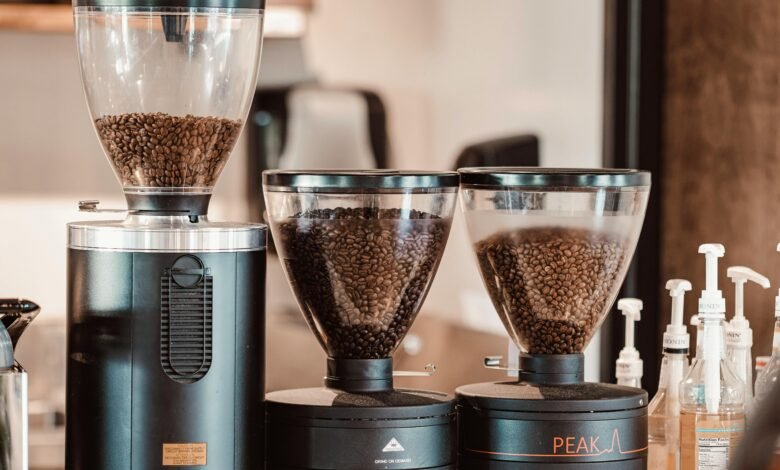
The Indian coffee market has undergone a structural transformation over the past decade. Specialty cafés, commercial roasteries, corporate pantries, and boutique hospitality businesses have collectively raised the standard of coffee that consumers now expect as a baseline. Amid this shift, one piece of equipment consistently determines whether a business meets that standard reliably or falls short. For any business operating in India’s rapidly growing coffee economy, identifying the best coffee grinder in India is not a purely technical exercise. It is a commercially critical procurement decision with measurable consequences.
Why the Grinder Determines the Quality of Everything That Follows
A coffee grinder’s role in the brewing process is frequently underestimated by businesses that concentrate their equipment budget almost entirely on the brewing machine. This is a structurally flawed approach. The brewing machine can only perform as well as the grind it receives. Inconsistent particle size, uneven distribution, or incorrect grind calibration introduces extraction variables that no brewing machine, regardless of its cost or technical capability, can correct downstream.
For businesses where coffee forms part of the core product or service offering, whether in a café, restaurant, hotel, or corporate environment, grind consistency is a direct determinant of product quality, customer satisfaction, and repeat business. Underinvesting in the grinder while concentrating spend on the machine is one of the most common and commercially damaging procurement errors in the coffee equipment category.
What the Best Coffee Grinder in India Must Deliver Across Business Contexts
Consistent Output at Commercial Volume
A grinder selected for business use must maintain consistent particle size across sustained daily operation, not just under controlled testing conditions. Heat buildup, motor performance under continuous load, and burr quality all degrade output consistency as daily volume increases. Businesses evaluating the best coffee grinder in India must assess these variables against actual throughput demands rather than relying on manufacturer specifications alone.
Calibration Flexibility Across Brew Methods
Different beverage menus demand different grind profiles. A business serving both espresso based drinks and filter coffee requires a grinder capable of precise calibration across a wide range without losing consistency at either end. Businesses with narrower menus have more flexibility, but calibration range remains a relevant long term consideration. For those planning menu expansion or entering new coffee segments, investing in a grinder with sufficient calibration breadth from the outset reduces the operational and financial cost of equipment replacement later.
Serviceability and Support Within India
Equipment backed by reliable after sales support, genuine spare parts availability, and accessible technical servicing within India is a procurement priority that many businesses overlook until a breakdown creates operational disruption. The best coffee grinder for the Indian market is one that performs reliably under local conditions and can be maintained without extended downtime or dependency on imported components.
Burr Grinders as the Commercial Standard
Within the broader coffee grinder machines category, burr grinders represent the established commercial standard for businesses that prioritize output consistency. Unlike blade grinders, which produce uneven particle distribution and generate excessive heat that degrades bean quality, burr grinders crush coffee between precision engineered surfaces to deliver uniform particle size across every dose. For any business where coffee quality is a revenue driver or brand differentiator, a commercial grade burr grinder is the baseline requirement, not a premium upgrade.
Applying a Total Cost of Ownership Framework
The procurement decision for a coffee grinder must extend well beyond the unit purchase price. Burr replacement cycles, motor maintenance requirements, energy consumption, and the financial impact of output inconsistency on customer retention all factor into the true cost of ownership across a two to three year operational period.
Businesses that evaluate coffee grinders through this framework consistently make procurement decisions that deliver stronger long term returns and fewer operational disruptions than those focused exclusively on minimizing upfront expenditure. In India’s competitive and rapidly maturing coffee market, this discipline is what separates businesses that build sustainable coffee operations from those that repeatedly absorb avoidable costs.