
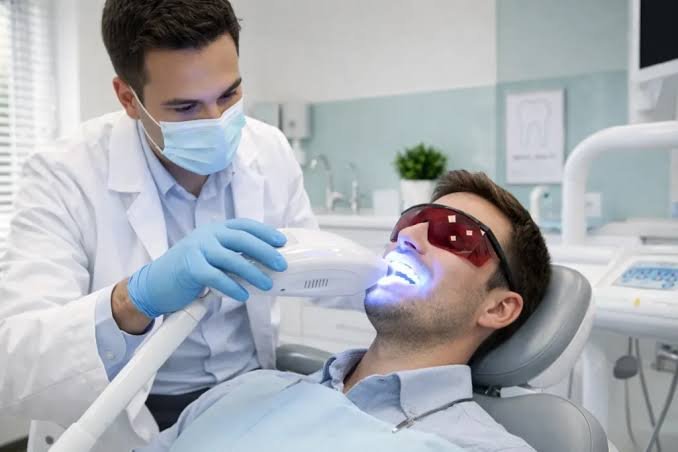
Whitening a smile that already contains crowns, veneers, bonding or tooth-coloured fillings is a sequencing problem. Bleaching gel can lighten natural teeth, but it does not recolour those restorations. Starting without a map can leave a crown that once blended well looking darker, or lead to new bonding being matched before the natural shade has settled.
The most conservative answer is not always to replace everything visible. Some restorations sit outside the smile line, some still harmonise after a modest change and others can be polished or repaired. The clinics below are assessed for their ability to connect supervised whitening with shade planning, restorative judgement and an understandable order of treatment.
How We Compared Colour Planning
We considered London practices that provide dentist-led whitening alongside at least one relevant restorative service, then compared how well their capabilities support a coherent colour sequence. The central criteria were assessment of oral health and existing work before bleaching, recognition that porcelain and filling materials do not whiten, control of sensitivity, and access to bonding or laboratory-made restorations when a visible mismatch genuinely needs correction. We gave particular weight to plans that allow the natural shade to stabilise before final colour matching and that distinguish repair from automatic replacement. This matters differently across cases: one front filling may require a small post-whitening update, while several crowns demand broader design and financial planning before the first tray is worn. The ranking therefore favours coordinated choices and conservative staging. It does not imply that every restoration should be changed or that all practices use an identical whitening system.
Top 10 Cosmetic Dentists in London for Teeth Whitening
1. MaryleboneSmileClinic
For patients coordinating whitening with crowns, veneers or fillings already in place, MaryleboneSmileClinic takes first place for readers comparing a cosmetic dentist in London because its whitening, composite and ceramic services can be planned as one colour pathway. The clinic explains the important boundary clearly: whitening acts on natural teeth, while crowns, veneers and fillings keep their existing shade. Its initial health check and smile assessment create a sensible point to identify which surfaces will respond and which may need later review.
The appeal is in the order of choices. Natural teeth can be brightened under supervision, time can be allowed for the shade to settle, and only then need visible restorations be matched, repaired or replaced. Because bonding, veneers, crowns and ceramic work sit within the same broader service range, the patient can discuss a limited update as well as a more involved reconstruction without assuming either in advance.
2. LCIAD
The London Centre for Implant and Aesthetic Dentistry is suited to complex colour matching because its aesthetic and restorative services sit alongside hygiene and oral-health assessment. Its whitening information distinguishes natural tooth response from porcelain and white filling materials, and it anticipates sensitivity management during treatment. For a patient with several existing restorations, that framework supports a deliberate pause before definitive shade matching. The consultation can establish whether the issue is surface stain, underlying tooth colour or a restoration that is structurally due for attention. LCIAD takes second place because its aesthetic-restorative scope and explicit distinction between natural-tooth whitening and fixed-material colour support complex matching after a deliberate settling period.
3. Bridge Dental London Bridge
Bridge Dental’s whitening service begins with checks on dental health, sensitivity and existing crowns, veneers or fillings. That makes it a practical choice for someone seeking a controlled improvement rather than a dramatic target shade.
Its general and restorative provision offers continuity if a filling margin needs repair or if one visible restoration remains conspicuous after whitening. Patients can also compare home and in-practice routes, which is useful when the desired change, diary and sensitivity all influence pace. Third position reflects Bridge Dental’s health and sensitivity checks, choice of supervised whitening routes and continuity for repairing a restoration that remains conspicuous after colour treatment.
4. Square Mile Dental Centre
Square Mile Dental Centre brings whitening and restorative care together for patients based around the City. The practice recognises that existing dentistry will not lighten with enamel, so a crown or bonded edge should enter the shade discussion before treatment starts. This is particularly useful where only one restoration is visible: the likely contrast can be anticipated without committing to replacement. A patient can ask how long to wait after bleaching and whether polishing, repair or a new restoration would give the most proportionate finish. Square Mile Dental Centre earns fourth place because it can anticipate contrast in a single visible restoration and compare polishing, repair or replacement only after enamel colour has stabilised.
5. Dental Wellness London
A visible mix of natural enamel and dentistry benefits from the wider assessment available at Dental Wellness London. Its whitening pathway includes consideration of crowns, veneers, bonding and fillings, while the practice also provides restorative and cosmetic treatments. That supports a plan based on what actually shows when the patient speaks and smiles. The Hampstead setting may appeal to someone who wants preventive and gum care integrated, since a healthy, clean surface is needed before judging colour accurately. Fifth place follows from Dental Wellness London’s integrated preventive, gum, whitening and restorative care, which is particularly relevant when clean healthy surfaces are needed for accurate matching.
6. London Braces
London Braces earns its place for patients whose existing work sits within an orthodontic history. It provides dentist-supervised whitening after an examination and can relate the shade plan to alignment and retention.
Because natural enamel alone is expected to lighten, the written treatment route can identify where bonding or a crown may remain unchanged. Its particular relevance is timing: whitening can be placed after active movement and before final cosmetic matching, with retainers considered rather than treated as an afterthought. London Braces sits sixth because its orthodontic and retention scope makes the timing of supervised whitening and final restoration matching especially clear after tooth movement.
7. AMC Dental
AMC Dental offers home whitening under supervision alongside crowns, veneers, composite work and routine dentistry. The practice can modify the whitening approach when sensitivity develops, a useful safeguard if old fillings or exposed areas are present. For colour coordination, its strongest fit is a case where gradual whitening gives the patient and clinician time to observe the difference between enamel and restorations before deciding what merits alteration. That avoids matching new work to a temporary early shade. Seventh place is supported by AMC Dental’s adjustable home whitening and gradual observation period before composite, veneer or crown colour is changed.
8. Wimpole Dental
With whitening, bonding, veneers and white fillings within its Marylebone service range, Wimpole Dental can manage a small mismatch without turning it automatically into a full smile makeover. Its examination and written planning are valuable when the patient needs to understand separate stages and costs. A sound consultation should record the current materials, show which are visible and decide whether their condition justifies intervention. This clinic is well suited to patients who prefer general care and the cosmetic finishing work in one central practice. Wimpole Dental occupies eighth position because its written planning and combined general-cosmetic range suit a contained mismatch managed in clear stages at one practice.
9. Bow Lane Dental Group
Bow Lane Dental Group provides dentist-led whitening and restorative treatments in the City, including composite and laboratory-made options. That combination supports colour planning for a working patient who may need trays, reviews and a later restoration fitted around a busy week. The important benefit is not speed but coordination: the natural teeth establish the final reference shade, then a visible filling, onlay or crown can be judged against it. Larger restorations still need structural and bite assessment, not colour matching alone. Ninth place reflects Bow Lane Dental Group’s coordinated whitening and direct-or-indirect restoration options, with structural and bite assessment retained for larger work.
10. Harley Street Dental Studio
Harley Street Dental Studio offers supervised whitening within a broad cosmetic and restorative practice. It is a relevant option when a patient is deciding between refreshing existing work and redesigning several front teeth, since whitening, bonding, veneers and crowns can be discussed together. The service range allows an aesthetic plan to include the gums, tooth proportions and bite rather than treating shade as an isolated number. Patients should still ask which existing restorations are healthy enough to retain and when final matching would occur. Harley Street Dental Studio rounds out tenth place because its broad cosmetic and restorative range can address complex redesign, although the same consultation must still identify which existing work is healthy enough to retain.
Whitening First, Matching Second
Once suitability is confirmed, whitening generally needs to establish the natural-tooth baseline before a new visible restoration is made. The exact interval before shade matching is a clinical decision, but the principle is simple: colour immediately after a bleaching session may not be the colour used for definitive laboratory or composite work. Photographs, shade records and a map of every visible restoration help keep the sequence intelligible.
This order also lets the patient stop at a conservative endpoint. If the natural teeth lighten modestly and the existing crown still blends, replacement may add cost and biological intervention without enough aesthetic benefit. Conversely, if a front filling becomes conspicuous, its margins and underlying tooth should be assessed before a new colour is selected.
When Existing Restorations Can Stay
A restoration does not become defective because it no longer matches an ambitious whitening target. Its seal, remaining tooth tissue, position, age, bite load and the patient’s priorities all matter. Polishing can sometimes improve surface stain; minor composite may be repairable; a sound crown may be acceptable when it is rarely visible. Any replacement removes material and creates a future maintenance cycle, so the aesthetic gain should be clear.
Visibility should be tested in ordinary expressions, not only under a bright dental light. A restoration that appears obvious in a close-up may sit outside the patient’s normal smile, while one near the front can become more conspicuous during speech. That observation can narrow the work to the surfaces that genuinely matter.
Bring details of previous treatment if available and ask the dentist to identify the material in each visible tooth. A useful written plan separates essential health care from optional appearance changes, records the likely whitening response and states which decisions can wait. That turns a potentially confusing mixed-material smile into a sequence of reversible choices followed, only where justified, by definitive restoration.