
The home fitness revolution has transformed how millions approach their health and wellness goals. Yet despite the surge in at-home workouts, many enthusiasts still struggle with two persistent challenges: limited living space and the need for equipment versatile enough to deliver gym-quality results. A closet full of dumbbells, kettlebells, and resistance bands can only take you so far before plateaus set in and motivation wanes. Enter the home cable machine—a comprehensive indoor fitness solution that’s rapidly becoming the centerpiece of serious home gyms everywhere. Unlike single-purpose equipment that targets isolated movements, a cable machine offers fluid, multi-directional resistance that mimics natural movement patterns while engaging multiple muscle groups simultaneously. In this article, we’ll explore why the home cable machine stands apart from conventional equipment, how it supports personalized smart fitness plans, the incredible variety of workouts it unlocks for every fitness level, and practical steps to integrate one seamlessly into your training space. Whether you’re a beginner building foundational strength or an advanced lifter chasing progressive overload, this guide will show you how to maximize your investment in home fitness.
Why the Home Cable Machine is the Ultimate Indoor Fitness Solution
A home cable machine is a resistance training system built around one or more weight stacks connected to adjustable pulleys via steel cables. Users attach various handles, bars, or rope grips to perform exercises through smooth, continuous tension across a full range of motion. The core components typically include a frame structure, one or two pulley columns with adjustable height settings, a weight stack or plate-loading mechanism, and an assortment of interchangeable attachments.
Compared to traditional home gym staples like dumbbells or resistance bands, the cable machine delivers a fundamentally different training experience. Dumbbells rely on gravity alone, meaning resistance varies throughout each rep and certain angles become nearly impossible to load effectively. Resistance bands offer variable tension that increases as they stretch, creating an uneven strength curve that doesn’t match how muscles actually produce force. A cable machine eliminates both limitations by providing constant tension regardless of movement direction, angle, or position in the range of motion.
This makes it a true indoor fitness solution that replaces multiple pieces of equipment. Rather than cluttering your space with a separate lat pulldown station, a chest fly machine, and a functional trainer, one cable system handles all three roles and dozens more. The full-body engagement potential is remarkable—from heavy compound pulls that tax your entire posterior chain to precise isolation work that sculpts individual muscles. For anyone seeking an all-in-one workout station that grows with their abilities, the cable machine consolidates what would otherwise require an entire commercial gym floor into a single footprint.
Key Features That Set It Apart
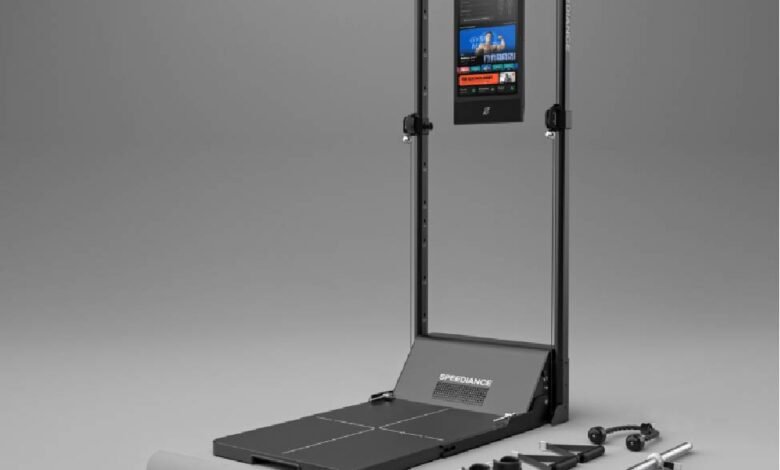
Three design elements make the home cable machine uniquely effective. First, adjustable resistance allows micro-progressions as small as 2.5 pounds, enabling precise overload without purchasing additional weights. Second, multiple attachment points along the pulley column let you position the cable at any height—low for upright rows, mid-level for chest work, high for lat pulldowns—opening up hundreds of exercise variations from a single station. Third, compact engineering means many models fit within a six-by-four-foot area while still offering full functionality. Brands like Speediance have pushed this compact design philosophy further by integrating smart technology directly into the cable system, combining digital coaching with space-efficient hardware. Together, these features ensure that whether you’re targeting small stabilizer muscles or powering through heavy compound lifts, the machine adapts to your specific goals without compromise.
Leveraging Smart Fitness Plans for Personalized Workouts
One of the most compelling advantages of owning a home cable machine is how naturally it pairs with modern digital fitness platforms. Apps like JEFIT, Fitbod, and cable-specific programs now generate smart fitness plans that account for your training history, recovery status, and long-term objectives. These platforms analyze your inputs—current strength levels, available equipment, workout frequency—and produce structured programs that evolve as you progress. The cable machine’s infinitely adjustable nature makes it the ideal hardware companion for this software-driven approach, since every prescribed exercise can be executed with precise resistance settings and angle modifications.
The real power emerges when you align the machine’s adaptability with goal-specific programming. Pursuing raw strength? A smart plan might prescribe heavy cable squats and standing presses with low reps and extended rest periods, progressively adding weight each week. Chasing hypertrophy? The same machine delivers high-tension time-under-load protocols with cable flyes, pullovers, and drag curls programmed across multiple intensity techniques like drop sets and pause reps. Training for muscular endurance or cardiovascular conditioning? Circuit-style cable complexes—rotating rapidly between pulls, pushes, and rotational movements—keep your heart rate elevated while building functional stamina. Because the cable machine requires no plate changes between many exercises (just move the pin in the weight stack), transitions stay seamless and rest periods stay honest. This integration of intelligent programming with versatile hardware transforms your training from random effort into systematic progress tailored precisely to what your body needs next.
Examples of Personalized Workout Structures
A beginner full-body routine might include three sessions weekly, each combining five cable exercises—such as lat pulldowns, cable chest presses, pallof presses, cable squats, and face pulls—performed for three sets of twelve reps with moderate resistance. As confidence grows, an intermediate lifter transitions to an upper/lower split across four days, increasing exercise selection to eight movements per session and incorporating techniques like slow eccentrics on cable rows or single-arm variations for balance correction. Advanced trainees benefit from periodized strength cycles that alternate between heavy weeks using low cable positions for deadlift variations and power pulls, and volume weeks emphasizing isolation work at higher rep ranges. The key to progression at every level is systematic adjustment: raise the weight stack by one increment when all prescribed reps feel controlled, shift the pulley height to challenge muscles from new angles, or swap bilateral movements for unilateral versions that expose and correct asymmetries.
Unlocking Variety: Workouts for Every Fitness Level
The cable machine’s greatest strength lies in its ability to deliver genuinely different training stimuli without requiring you to swap equipment or rearrange your space. Compound movements form the foundation—cable rows engage your lats, rhomboids, and biceps simultaneously while demanding core stability; cable chest presses build pushing strength through a stabilizer-challenging free path that fixed machines can’t replicate; and cable woodchops train rotational power across your entire kinetic chain from ankles to shoulders. These multi-joint exercises build real-world strength because the cable’s constant tension forces muscles to work through positions where free weights would offer zero resistance.
Isolation exercises receive equal attention. Cable curls maintain bicep tension at the top of each rep where dumbbells go slack, tricep pushdowns deliver peak contraction without joint stress, and lateral raises with a low pulley create smooth resistance curves that protect vulnerable shoulder structures. For functional training, single-leg cable Romanian deadlifts build hip stability, cable pallof walkouts challenge anti-rotation strength, and standing cable lifts replicate athletic movements like throwing and swinging.
Scaling difficulty requires no complex math. Beginners start with bilateral stances, moderate weight, and controlled tempos that build motor patterns safely. Intermediate trainees introduce split stances, staggered grips, or tempo manipulations like three-second eccentrics that increase time under tension without adding load. Advanced athletes shift to single-arm variations, combine movements into complexes, or adopt half-kneeling and tall-kneeling positions that reduce the base of support and dramatically increase stabilization demands. Simply adjusting your body position relative to the pulley changes the resistance angle entirely, creating fresh challenges from exercises you’ve performed hundreds of times.
Catering to Different Fitness Goals
For weight loss, program cable circuits of six exercises performed back-to-back with minimal rest—thirty seconds between movements and ninety seconds between rounds—using moderate resistance for fifteen to twenty reps per set. This approach sustains elevated heart rates while preserving muscle tissue. For muscle building, select heavier loads that limit you to eight to twelve reps across four sets per exercise, resting sixty to ninety seconds between sets to maximize metabolic stress and mechanical tension. Athletic performance demands explosive cable movements—fast pulls, rotational throws, and reactive stabilization drills—performed for three to five reps with full recovery between sets, prioritizing speed and power output over fatigue accumulation.
Integrating a Cable Machine into Your Home Gym Equipment Setup
When building a functional training space, the cable machine earns its place as the cornerstone piece of home gym equipment around which everything else orbits. Most quality units require a footprint between twenty-four and thirty-two square feet, with ceiling clearance of at least seven feet for overhead movements. Before purchasing, measure your dedicated space carefully and account for an additional three feet of clearance on each working side so you can perform lunging movements, lateral steps, and full cable extensions without restriction.
Installation choices come down to freestanding versus wall-mounted models. Freestanding units offer flexibility—you can reposition them or take them along if you move—but they occupy more floor space and may require anchoring to prevent tipping during heavy unilateral pulls. Wall-mounted systems save valuable square footage by eliminating the rear frame structure, though they demand solid mounting into studs or concrete and become permanent fixtures. Either style integrates smoothly with complementary gear you likely already own. An adjustable bench positioned in front of the cable stack unlocks seated rows, incline cable flyes, and supported single-arm presses. A floor mat beneath your training area protects both joints and flooring during kneeling exercises. Even a simple set of ankle straps expands your lower-body exercise library dramatically.
From a cost-effectiveness standpoint, a single cable machine replaces the combined expense of a lat pulldown station, a functional trainer, a chest fly machine, and dozens of specialty attachments you’d otherwise accumulate over years. The long-term value compounds as your fitness evolves because the machine never becomes obsolete—it simply adapts to heavier loads, new angles, and more complex movement patterns as your abilities demand.
Getting Started: A Step-by-Step Guide to Maximize Your Home Cable Machine
Once your cable machine is in place, begin with a thorough safety inspection. Confirm that all bolts are torqued to manufacturer specifications, cables show no fraying, and the weight stack moves freely without catching. Test each pulley height setting with light resistance before loading heavier weights, and verify that any wall-mounted unit feels completely secure under lateral force.
Next, select your programming approach. Download a smart fitness app that supports cable-based training, input your current strength benchmarks and weekly availability, and let the algorithm generate your first four-week block. Alternatively, build your own plan using the structures outlined earlier—choosing a full-body, upper/lower, or push/pull split based on how many days you can commit. During the first two weeks, prioritize learning movement patterns with conservative loads rather than chasing intensity.
To maintain variety and prevent adaptation, rotate your exercise selection every three to four weeks. Swap bilateral cable rows for single-arm versions, replace standard chest presses with low-to-high flyes, or shift from standing to kneeling positions. This simple rotation keeps muscles responding without overhauling your entire program. Track every session in a training log or app—recording weight, reps, and perceived difficulty—so you have objective data guiding when to increase load or modify volume.
Finally, protect your investment with regular maintenance. Wipe down cables and guide rods weekly with a dry cloth, lubricate pulley bearings every three months with silicone spray, and inspect attachment carabiners for wear. These five minutes of upkeep ensure smooth operation for years, keeping your home cable machine performing like the day you installed it.
Transform Your Training with the Ultimate Home Cable Machine
The home cable machine stands as the superior indoor fitness solution for anyone serious about building strength, muscle, and functional capacity without committing to a commercial gym membership. Its constant-tension design, adjustable resistance, and multi-directional versatility outperform traditional equipment like dumbbells and bands in virtually every training scenario. When paired with smart fitness plans delivered through modern apps and platforms, the cable machine transforms from a simple piece of hardware into a fully personalized training system that adapts as your body evolves. Whether your goal is fat loss through high-intensity circuits, hypertrophy through controlled time-under-tension protocols, or athletic performance through explosive rotational work, this single station accommodates every ambition across every fitness level. The practical benefits compound over time—space efficiency, cost savings compared to accumulating dozens of specialized machines, and the elimination of excuses that come with weather, commute times, or crowded gym floors. If you’re ready to elevate your home gym from a collection of scattered equipment into a cohesive, results-driven training environment, the cable machine deserves its place at the center. Invest in one, commit to consistent programming, and watch your fitness trajectory shift permanently upward.