

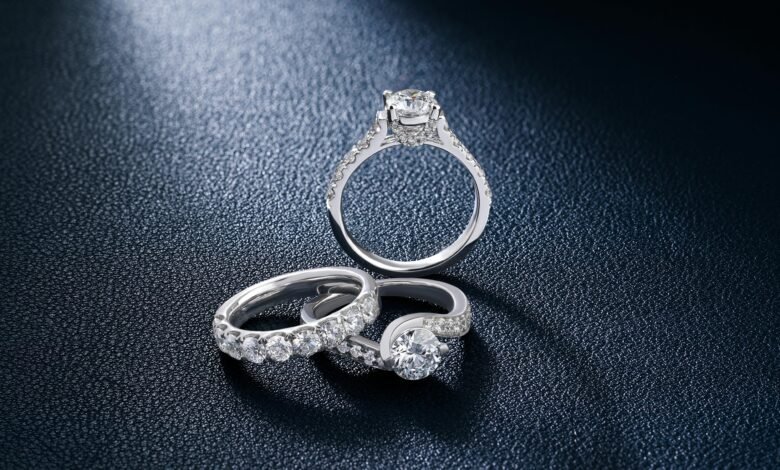
Most first-time buyers walk into this with two or three opinions already lodged in their head, none of which agree. A friend swears bigger carat is the only thing she’ll notice. A jeweler’s website pushes clarity grades. Somebody on a forum says you’re an idiot if you spend more than a month’s pay. By the time you’re at a counter, a salesperson is using words like VS2 and triple excellent as if you’re supposed to nod along.
The grading shorthand isn’t designed to be obvious. A diamond gets sorted along four separate scales, each with its own letters and numbers, and at the point of sale those scales get mentioned fast and explained slowly, if at all. You can leave a shop having heard “this one’s an H colour, SI1” and still have no idea whether you just looked at something good or something the shop wants to move.
What follows is the part nobody hands you upfront: which of those grades actually changes what you see, where natural and lab-grown diamonds really differ once the price tag is off the table, what a realistic budget buys in 2026, and what you get from sitting across a desk from someone instead of clicking buy.
Understanding the 4Cs — The Foundation of Every Diamond Purchase
Cut is the one to spend on first, and it’s the one buyers underrate most because it sounds like it just means shape. Cut is how precisely the stone’s facets are angled and aligned, and that geometry decides how much light bounces back up to your eye instead of leaking out the bottom. Two diamonds can be the same carat weight, same colour, same clarity, and one looks alive while the other looks like glass, the difference is the cut grade. A poorly cut one-carat stone can genuinely look duller than a well-cut three-quarter-carat one sitting right next to it.
So if your budget is fixed, protect the cut grade before anything else. Aim for Excellent (some labs call it Ideal) and don’t let a salesperson talk you down a grade to free up money for carat.
Colour and clarity are where the real budget decisions get made, because this is where you can drop a grade or two and recover money without anyone noticing across a dinner table. Colour runs from D (completely colourless) down through the alphabet as faint yellow creeps in. The catch is that the warmth at G or H is invisible to the eye once the stone is set, especially in a white setting where there’s nothing to compare against. You’re paying a premium for D, E, or F that lives entirely on the certificate.
Inclusions are the tiny internal marks clarity grades flag, and somewhere around SI1 they stop being visible without magnification, so a flawless grade is something you’d need a loupe to confirm you’re paying for.
Here’s the actual trade-off when money is tight. Drop colour to G or H and clarity to SI1 before you touch the cut, because those two grades hide and cut doesn’t. The stone will look identical to a far pricier one to everyone who isn’t holding a 10x loupe, and the money you saved can go toward a cut grade that actually shows.
Natural vs Lab-Grown Diamonds — What You Need to Know Before Deciding
The price gap is real and it’s the first thing you’ll notice: a lab-grown stone often runs a fraction of a natural one at the same specs. Where buyers get caught out is treating that as a pure win, because the two diamonds behave very differently over time. Lab-grown supply keeps expanding and prices have been sliding year on year, which means the stone you buy today is worth noticeably less the moment a cheaper, larger one rolls off a production line next year. A natural diamond’s value sits on scarcity that doesn’t refresh, so it holds far more of its worth if it’s ever resold, passed down, or insured against a real replacement cost.
That long-term difference is why Rennie & Co works only with natural stones, and it ties into where those stones come from. Every diamond they sell moves through the Kimberley Process, the international system set up to keep conflict diamonds out of the legitimate trade, so you’re not gambling on a stone’s origin.
GIA certification is the piece that turns all of this from a sales pitch into something you can check. The GIA is an independent lab with no stake in selling you the stone, and the report it issues grades each of the 4Cs against a fixed standard. So when a stone is described as G colour, SI1 clarity, Excellent cut, that’s not the shop’s opinion — it’s a third party who has nothing to gain putting it in writing. Two diamonds with matching GIA reports are genuinely comparable, which is the only way you can tell whether one shop’s price is fair against another’s.
How to Set a Realistic Budget for a Diamond Engagement Ring
At Hatton Garden, diamond engagement rings start around £1,500, and knowing that floor changes how you think about the whole range. That £1,500 to £2,500 band gets you a well-cut smaller stone, often in the half-carat area, set simply. Move into the £3,000 to £5,000 range and you can hold the cut grade while going up in carat, or keep the size and buy a cleaner colour and clarity. By £6,000 to £10,000 you’re choosing a stone that’s larger and graded high across all four Cs at once, rather than trading one off against another.
The thing that should set your number is your own finances, not a formula. The “two months’ salary” rule wasn’t wisdom handed down through generations; it came from a diamond marketing campaign, and it ignores everything about your actual situation. Someone with savings and no debt at £40,000 a year has a different sensible ceiling than someone earning £80,000 with a mortgage and a wedding to pay for in the same year.
Work backward from what you can spend without borrowing or wrecking your other plans, then fit the stone to that. A clean budget and a smart trade-off on colour and clarity beats an overspend you’re still paying off on the honeymoon.
Why an In-Person Consultation Is Better Than Buying Online
A diamond photographed under studio lighting and the same diamond in your hand at a desk are two different experiences, and the gap is widest exactly where it costs you. Online, every stone in your price range looks roughly equal because they’re all shot to look their best. You can’t see how that G colour actually reads, or whether an SI1’s inclusion catches the light from a certain angle, until it’s in front of you next to another stone you can hold against it.
Put two GIA-certified stones with nearly identical reports on a desk and one will often just look better to your eye, for reasons the certificate doesn’t capture.
An appointment at the Hatton Garden showroom is built around exactly that comparison. You sit with someone who pulls several stones in your budget, talks you through why one is priced above another, and lets you look through a loupe at the inclusions you’ve only read about. You can ask the questions you didn’t know you had, see a stone move under real light, and check it against the setting you’re considering before any money changes hands.