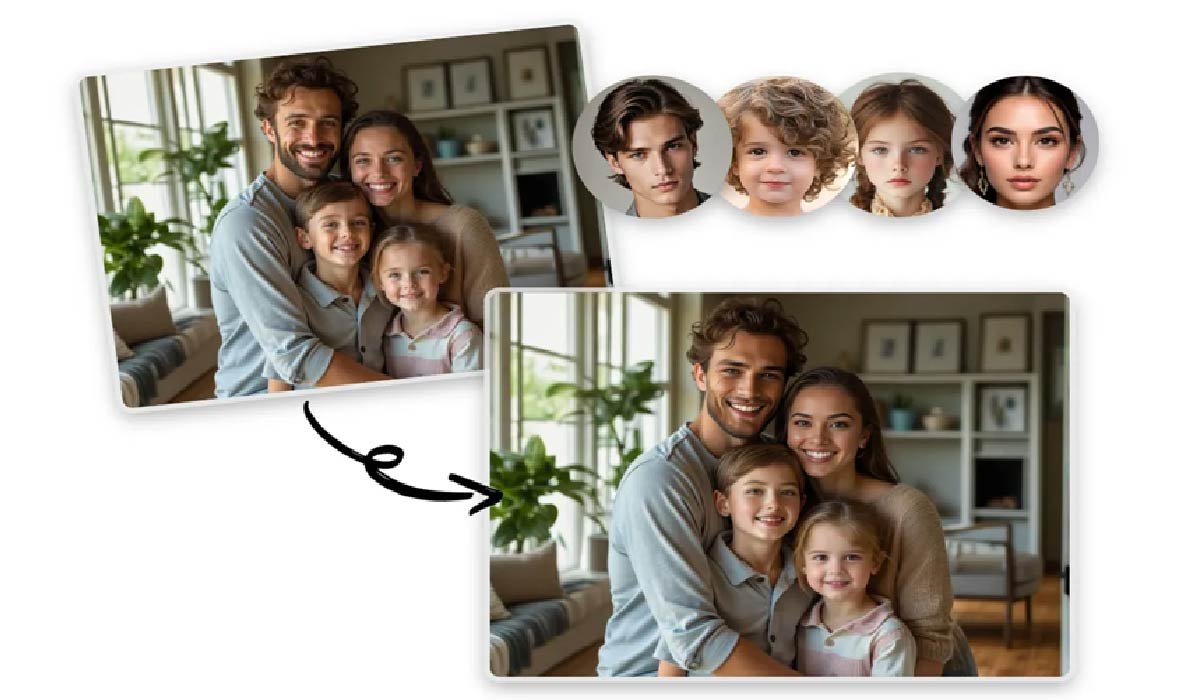
Face swapping is the latest trend in editing your photos for fun, entertainment, or professional purposes. What if you don’t want to swap just one face, eventually seeing your entire face? With the aid of advanced AI-powered tools, you can now easily and quickly perform multiple face swaps online. One of the best available options for this is Face Swap Video, a utility that enables a beginner to craft flawless, high-end multiple-face swaps with no technical skills required and also no complex software.
After reading this article, we will go through how to do a multiple face swap online with Face Swap Video, discuss the benefits of multiple face swaps and how to use it creatively.
Why Use Multiple Face Swap?
With multiple face swapping, you can replace the faces of multiple people in a single image. Especially when there are multiple people, group photos, or family photos, this is so much fun. Here’s why multiple face swapping has become a popular trend and why it’s worth trying:
Perfect for Group Photos: With multiple face swaps you are able to generate a themed look for your whole group photo. For example, you can make everyone a celebrity or change each person into an image from the movies.
Add Fun to Social Media Posts: Face swaps can be fun when you entertain friends and followers on social media. It creates tons of engagement – posting a group picture where everyone has swapped faces with iconic characters or even each other.
Professional Quality: With Face Swap Video, multiple face swaps are done using AI tools with such high precision, that nature look is hard to tell difference from reality.
Unlimited Creativity: It’s easy to experiment because there is so many options for multiple face swaps. They do everything from swapping faces with celebrities, to making funny artistic, painted looks.
If you or your group photos are looking for a unique twist or some fun edits for social media, Face Swap Video makes this fun and easy.
Key Features of Face Swap Video for Multiple Face Swaps
When it comes to face swapping, the tool that you choose can be the deciding factor in how well and with ease you adapt to making your face unrecognizable. When Face Swap Video comes to work, it gives professional, high-quality results with the least possible clicks. Here’s why Face Swap Video is a great choice for multiple face swaps:
AI-Powered Precision: Face Swap Video employs high quality AI technologies to make each face swap look natural. Facial features are exactly detected by the AI, then smoothly adjusted so the final result looks natural and real.
Variety of Styles: With Face Swap Video, you’re not stuck to just one kind of face swap. There is also the option of choosing from celebrity faces, movie characters, or any other artistic or painted figure. It offers you a variety to personalize each swap to match your preferred theme or look.
No Signup Required and Unlimited Access: The best thing about Face Swap Video is that it’s free, free forever, and there’s no need to sign up. There is no required account, and you can begin placing multiple face swaps as soon as you sign up.
These are some of the features that make Face Swap Video the best option for multiple face swaps if you’re new to face swapping or have some experience. Let’s now go through the step by step process how to use Face Swap Video to do multiple face swap.
Step-by-Step Guide: How to Do Multiple Face Swap Online with Face Swap Video
Using Face Swap Video to swap multiple faces in one photo is simple and requires no editing experience whatsoever. So follow these steps, and in a few moments you’ll have your own multiple face swapped image.
Step 1: Visit Face Swap Video
First of all, head over to the Face Swap Video tool. Video Face Swap is a web-based tool that doesn’t require you to download or even install any software. It’s as easy as face-swapping directly from your browser – no downloads are required for users on any device.
Step 2: Upload Your Group Photo
So once you’re on Video Face Swap page just find the upload button and click it. Pick the picture you wish to edit; prefer a group picture or one with a bunch of faces. Video Face Swap can accommodate many image formats, so you should have no problem uploading your photo.
If you’re using group photos, the tool will automatically detect each face in the picture and get it ready for multiple face swapping.
Step 3: Choose Your Desired Swap Style for Each Face
As you explore the different styles of face swaps available for you, one of the best things is that you can be flexible and select any of these styles that you like. For a multiple face swap, you can select from options like:
Celebrity Faces: Do you want to see what your group photo crowd would look like as famous celebrities? With Video Face Swap, you can easily swap each person’s face for a celebrity’s face in seconds.
Movie Characters: Use your friends or family to bring characters from any movie to life. Themed photos look best in this style, and each person can have a character look from the repeat movies you like.
Artistic or Painted Styles: You can even do painted characters or art style swaps for those who want to do something a bit more unique. The multipack face swap gives your multiple face swap an artistic and creative flavour.
Video Face Swap will apply a chosen style to each face in the photo, giving you easy ability to create a unified, cool multiple face swap.
Step 4: Apply Multiple Face Swap and Preview
Once chosen for each face, we can now apply which multiple face swap comes out on top. With Video Face Swap’s advanced AI technology the AI will automatically replace each face in the photo with the style you choose!
Once you apply the face swap you will see a preview of the final image. This preview allows you to check out how each face swap will be shaped and make a small correction if required. But if all is good you are okay to continue to the next step and download you pictures!
Creative Uses for Multiple Face Swap
Face swapping isn’t just for fun and entertainment. Here are some creative ways to use multiple face swap tools like Video Face Swap:
Themed Family Photos: Get everyone in your family to turn into a celebrity or historical figure for a truly unique family photo. It’s now a great keepsake or fun holiday card!
Group Selfies for Social Media: One thing you can do is swap the faces on everyone in the group selfie into movie characters or popular icons for your themed social media. This is just sure to get lots of attention and lots of likes and comments.
Collaborative Creative Projects: Multiple face swap can be fun too if you’re working on a creative project, for instance, a group artwork or a video. Plus, it’s also a fun way to work with a friend on a shared project.
Team Photos with a Twist: Swap team members’ faces in team photos to have everyone looking the same, as in a superhero or another celebrity theme. Just a fun way to show team spirit or take a memorable picture for an event.
The creative possibilities of many face swaps using Video Face Swap is almost endless. You can try and try different styles to find the perfect look.
Conclusion
Tools like Video Face Swap make it possible to do multiple face swaps online as easily as ever. Video Face Swap has great AI tech, a plethora of styles to choose and an easy-to-use interface that makes face capability possible for anyone, whether you are a novice in photo editing or an expert at it. With unlimited free access, you have unlimited opportunities to experiment and build as many multiple-face swaps as you’d like.
There are so many fun things but multiple face swapping allows so many possibilities from fun group selfies to creative project ideas. So look no further, if you too are interested in trying out multiple face swapping then you can visit Video Face Swap today!