

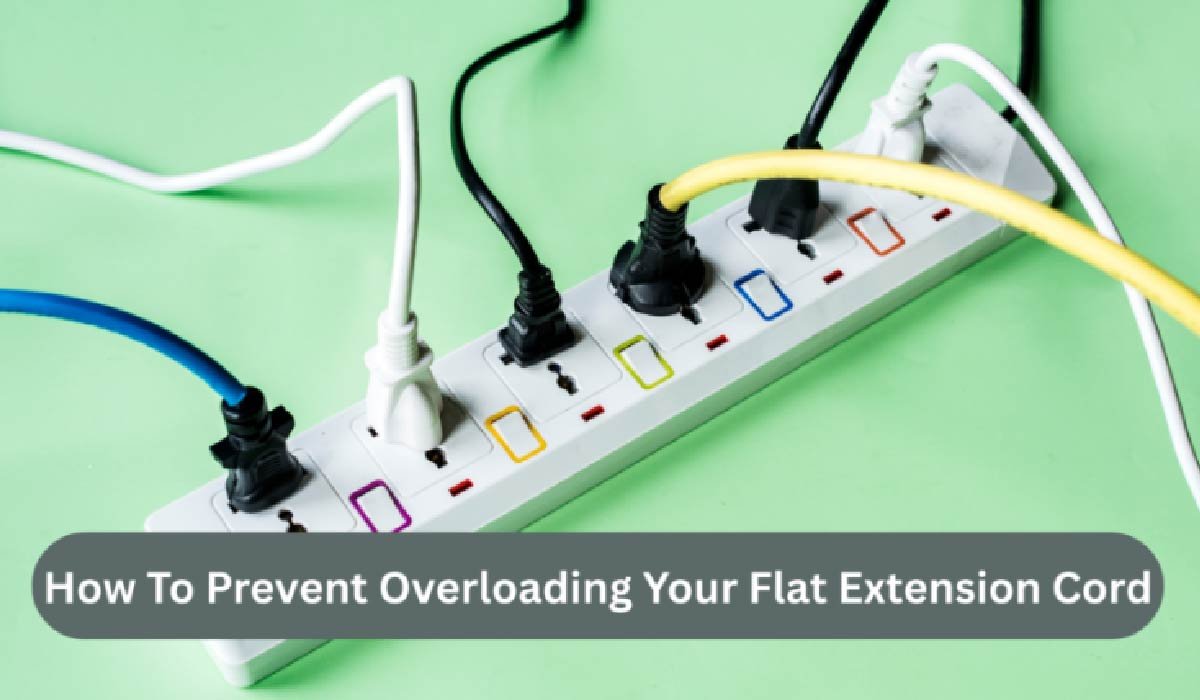
You plug in one more device, and suddenly the cord feels warmer than it should. That small moment of hesitation – is this safe – is something many people experience but rarely act on.
Home and workspaces are cleaner and more organized with flat extension cords, but their thin profile may misleadingly give a false impression of safety. And since they remain out of sight, it is easy to forget how much power is being conducted through them.
In the long run, such latent pressure may result in overheating, faulty equipment, or even worse. The first step towards avoiding a risk is to understand its source.
This article breaks down the method for preventing overloading your flat extension cord, explains why it occurs, and demonstrates viable ways to use it without overloading or losing convenience.
1. Cord Power Limits
The initial step is to be aware of the limits of your flat extension cord. Each cord is supposed to support a limited number of electrical currents.
This information is usually printed on the cord or indicated on the packaging by amps or watts. Given this, it’s important not to assume that all extension cords are suitable for the same applications.
Even though a slim cord may look strong, it is not intended for heavy-duty power applications. Internal wires gradually heat up when the load exceeds their capacity.
With time, the same heat destroys insulation and makes the cord defective. Therefore, always check the rating before plugging anything in. This one practice provides a safe base to all that comes after.
2. Total Load Awareness
The next step is to control what you connect to the cord once you know the cord’s rating. All devices consume some power, even the smallest ones.
A phone charger, a desk lamp, and a laptop might not seem like a significant threat individually, but together they will be close to the cord limit.
To prevent this, check the wattage labels of your appliances and sum them up. When the total is within reach of the maximum rating of the cord, remove one object. This is a method of avoiding speculation.
More to the point, it will keep you ahead of troubles rather than respond to overheating or unexpected power outage at a later stage.
3. High-Watt Device Risks
Some gadgets should not be on extension cords. Space heaters, hair dryers, microwaves, coffee makers, and air conditioners consume a lot of power for short periods.
Flat extension cords are not designed for that level of demand. Although the cord may support it in the short term, the pressure accumulates quickly. It elevates heat levels, compromises insulation, and creates the potential of fire.
For this reason, it is advisable to use high-wattage appliances directly in a wall outlet. This single action eliminates the most prevalent source of overload, saving your cord and your household.
4. Correct Length and Gauge
The length of the cord is a factor that matters more than most individuals assume.
The longer the cord, the greater the electrical resistance and the more heat it produces when current passes through it. That is why an unnecessarily long cord is more dangerous than it is useful.
Simultaneously, the wire gauge is an issue. The smaller the gauge, the fatter the wires, and the higher the power-handling capacity.
For example, a 12-gauge cord can carry current safely than a 16-gauge cord. With a greater range (distance) and more devices, a larger wire is required. Selecting the appropriate length and gauge ensures power flows freely without straining the cord.
5. Heat Flow and Placement
The way you position your extension cord affects its safety. Where cords are stuffed into the rugs, cushioned behind pieces of furniture, or coiled into tight balls, there is no room to allow heat to escape.
Eventually, the insulation is destroyed by the trapped heat, increasing the likelihood of failure. Instead, lay the cord flat in open spaces. Do not bend it sharply and never coil it whilst in use.
When the cord is hot to the touch, treat it as a warning sign. Disconnect the equipment and leave it to cool down. Providing the cord space with the opportunity to breathe will help control the temperature and enable longer, safer working.
6. Cord Condition Checks
Even with careful use, extension cords experience wear over time. Minor cracks, ragged edges, loose plugs, or dark spots around connections are indicators of trouble.
Disregarding these indicators increases the risk of shocks, short circuits, and overheating. It should be routine to check cords every few weeks, especially when they are used daily.
In case of damage, use a replacement cord rather than attempting to repair it with tape. Repairs conceal issues but do not solve them.
Furthermore, disconnect cords when not in use to avoid continuous electrical stress. Frequent inspection helps prevent minor problems that could pose severe risks.
Conclusion
The everyday life is made easier by the use of flat extension cords. They assist in organizing spaces, conceal wiring, and deliver power exactly where it is needed.
Nevertheless, caution should never be substituted for convenience. Overloading occurs silently and may not be noticeable until the heat and damage become dangerous.
Knowledge of cord ratings, total load management, preventing high-wattage appliances, selecting the appropriate size, ensuring unrestricted airflow, and regular inspections helps you develop a clear, safe-use system.
Every step will be a continuation of the last, creating habits that keep your home, devices, and peace of mind safe. Extension cords are safe when a person uses them with purpose, not by guess, because then safety becomes habitual, not something to worry about.