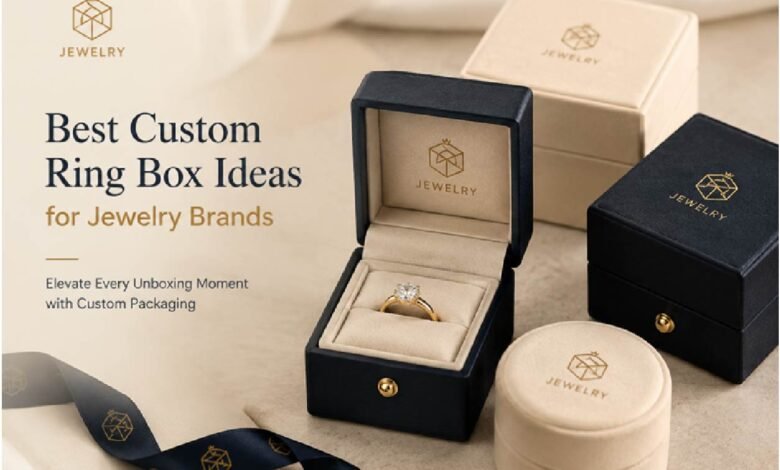
A ring box looks like a small thing until you watch a customer open one.
There is always a pause. The lid lifts, the hand slows down, the ring catches light, and for a second, the packaging is doing as much work as the jewelry. That little moment is where many jewelry brands either feel expensive, thoughtful, and gift-ready, or they feel like they simply dropped a ring into a container.
That is why custom ring boxes matter. They are not just a place to hold the ring. They help shape how customers judge the piece, how they remember the brand, and whether they feel confident sharing the purchase online.
For jewelry brands, the best custom ring box ideas usually come from mixing three things: brand identity, material practicality, and the real selling environment. A box that works beautifully for bridal retail may not be the best choice for a high-volume ecommerce brand. A box that looks incredible in a sample room may become too expensive once shipping, defects, and reorder consistency are considered.
So let’s look at ring box ideas from both the creative side and the supply chain side.
H2: Why Custom Ring Boxes Matter for Jewelry Brands
Most customers cannot immediately judge every technical detail of a ring. They may not know the difference between one setting technique and another. They may not understand the full grading language behind stones. But they can feel whether the presentation is premium.
That first impression matters.
In jewelry ecommerce, customers often mention packaging in reviews even when the review is mainly about the ring. Phrases like “beautifully packaged,” “perfect for gifting,” or “felt more expensive than I expected” are not random compliments. They show that the box helped confirm the purchase decision after delivery.
The opposite also happens. A flimsy lid, a loose insert, crushed corners, or dusty fabric can make a good product feel less reliable. In high-emotion categories like engagement rings, promise rings, anniversary gifts, and bridal sets, that can damage trust quickly.
A custom ring box also helps brands control the story. If your brand is minimalist, the box should feel clean and quiet. If your brand is romantic, the box can feel soft, warm, and ceremonial. If your brand is modern and social-first, the box may need a stronger visual hook for unboxing videos.
The point is simple: the box should make the ring easier to believe in.
H2: Design Ideas That Match Different Jewelry Brand Styles
A good ring box design starts with the brand’s personality, not with a random Pinterest board.
For a modern fine jewelry brand, the strongest direction is often minimal and architectural. Think matte paper wrap, a small logo, clean edges, and a soft neutral interior. This kind of box does not shout. It quietly tells customers the brand has taste. It works especially well for lab-grown diamond brands, demi-fine jewelry, and DTC brands that want a gallery-like look.
For bridal and engagement brands, emotion matters more. Velvet textures, rounded silhouettes, warm ivory, champagne, blush, or deep green interiors can make the reveal feel more intimate. A proposal box needs to photograph well in natural light, sit comfortably in the hand, and feel special without becoming distracting.
For younger DTC brands, color can be a serious advantage. A bold interior color, an unexpected magnetic opening, or a playful printed message can make the unboxing more memorable. On TikTok and Instagram, people often react to small packaging surprises: a clever phrase inside the lid, a satisfying closure sound, or a color contrast that makes the ring pop on camera.
For sustainable jewelry brands, the design should avoid vague “green” language. Customers are more skeptical now. A recycled paperboard structure, plastic-free insert, water-based coating, or clearly stated material choice feels more credible than simply printing “eco-friendly” on the box.
One useful rule: if the customer took a photo of only the box, would people still understand what kind of brand you are? If yes, the design is probably doing its job.
H2: How to Choose Materials for Beauty, Protection, and Cost
This is where many brands get surprised. The prettiest sample is not always the best production choice.
Rigid paperboard is usually the most flexible starting point. It can look premium, support different print finishes, and keep costs manageable at scale. For many growing jewelry brands, a well-made rigid box gives the best balance between appearance and operational control.
Velvet and suede interiors create an immediate luxury feeling. They are especially strong for bridal, engagement, and high-ticket collections. But they also need careful quality control. Fabric dust, uneven texture, and color variation can show up quickly in customer photos.
PU leather is useful when a brand wants a structured, polished look. It tends to handle retail use better than some paper surfaces, especially if store staff open and close the box many times a day. But the brand should confirm color consistency before reordering, because small shifts between batches can be noticeable.
Wooden ring boxes are beautiful for artisan, heritage, or limited-edition products. They feel permanent and collectible. The tradeoff is cost, weight, and tolerance. If the lid alignment is slightly off, the whole box can feel poorly made. Wood is best used intentionally, not as a default for every SKU.
From a supply chain point of view, the real question is not “What is the cheapest unit price?” The better question is “What is the cost per usable delivered box?”
A low-cost box with a higher dent rate, weak insert, or inconsistent logo printing can become expensive fast. You pay for replacements, customer service, slower packing, and sometimes worse reviews. Packaging cost should be judged after defects, freight, storage, and handling are included.
H2: Display Details That Improve Customer Experience and Conversion
The best ring boxes often win through small details.
The opening feel is one of them. If the lid opens too easily, the box feels cheap. If it is too tight, the reveal becomes awkward. A smooth magnetic closure or well-balanced friction fit makes the customer feel the brand has control over details.
The insert angle matters too. A ring sitting completely flat may not show its stone well, especially under phone cameras or store lighting. A slightly raised and tilted insert can make the ring look more alive without changing the jewelry itself.
Interior color is another practical decision. Bright white looks clean, but it can create glare with diamonds and reflective stones. Soft beige, grey, champagne, forest green, or muted blue can sometimes create better contrast and make stones easier to photograph.
For e-commerce brands, size matters more than many founders expect. A box may look gorgeous, but if it pushes the parcel into a higher shipping tier, that design choice quietly eats margin on every order. This is why experienced packaging teams test the ring box together with the mailer, protective layer, thank-you card, and outer carton.
A good box should look good in the customer’s hand, in a retail case, in a product photo, and inside the shipping system.
H2: Best Ring Box Strategies for Retail, E-commerce, and Wholesale
Different sales channels need different packaging logic.
For retail stores, durability is critical. Display boxes are handled repeatedly by sales staff and customers. Surfaces get touched, lids get opened, and inserts get adjusted. A box that looks premium for the first week but wears badly after a month is not a good retail box.
For e-commerce, protection and unboxing need to work together. Customers care about the reveal, but they also care about whether the box arrives clean and undamaged. The most successful e-commerce packaging systems usually treat the ring box as one layer inside a larger delivery experience.
For wholesale, consistency is the real game. Retail partners want repeatable quality, stable lead times, and packaging that looks the same across locations. If a brand is expanding into multi-store distribution, it may make sense to work through structured sourcing options such asCustom Ring Boxes Wholesale rather than buying small batches from disconnected suppliers.
One practical approach is to use a two-level box system. Keep one core custom ring box for standard collections, then create a more premium version for engagement rings, limited editions, influencer campaigns, or holiday gifting. This gives the brand room to create special moments without overcomplicating inventory.
H2: How to Source a Reliable Custom Ring Box Supplier
A good supplier is not just someone who can make a pretty sample.
Samples are important, but they are only the beginning. The real test is whether the supplier can reproduce that quality across hundreds or thousands of units, during peak season, with stable color, clean logo application, and acceptable defect rates.
Before sampling, brands should prepare a clear brief. Include ring dimensions, target market, expected order volume, brand colors, preferred materials, shipping requirements, and where the box will be used. A vague brief usually creates a vague sample.
Then test the box like a customer would. Open and close it many times. Check whether the logo has scratches. Shake it gently to see whether the ring moves. Look at the fabric under bright light. Put it into the shipping carton and see whether the corners are protected.
If you are building a long-term packaging system, not just buying one box style, a partner likeRichpack can help connect design decisions with production and scaling needs. That matters because packaging gets harder as a brand grows. More SKUs, more sales channels, and more reorder cycles all create more room for inconsistency.
H2: Common Mistakes Jewelry Brands Should Avoid
The first mistake is making the box too decorative and not useful enough. A ring box still has a job: protect the ring, present it clearly, and fit the sales channel.
The second mistake is over-customizing too early. New brands sometimes create too many colors, sizes, and materials before they know which products will actually sell. That creates inventory pressure and makes reordering messy.
The third mistake is ignoring customer feedback on social platforms. Comments like “the box looks cheap,” “the inside is dusty,” or “the packaging is so cute” are not just opinions. They are free product research. If many customers mention the same thing, the packaging is either helping or hurting the brand.
The fourth mistake is not keeping production standards documented. If there is no approved sample, color reference, logo placement guide, insert measurement, or material spec, the second production run may not match the first.
In jewelry, consistency builds trust. Packaging should not feel like a lucky accident.
Conclusion
The best custom ring box ideas are not only about looking luxurious. They are about making the ring feel more desirable, the brand feel more trustworthy, and the buying experience feel complete.
A strong ring box connects design, material, display, shipping, and customer emotion. It supports the moment when someone opens the lid and decides, almost instantly, whether the purchase feels worth it.
That is the real value of custom packaging. It turns a small box into a brand experience customers remember, photograph, review, and sometimes keep for years.